SCORM content remains one of the most widely used formats in online training. It is compatible with any LMS, allows for traceability, and facilitates learning measurement. And yet, many SCORM courses fall short.
The problem isn’t with the technology, but with how the content is structured. When a SCORM is designed as a long “digitized” PDF, abandonment is almost inevitable.
The good news is that there is no need to reinvent SCORM, but rather to use it well.
Why is so much SCORM content abandoned?
Before discussing solutions, it is important to be aware of the most common mistakes:
- Content too long and dense.
- Lack of clear objectives from the outset.
- Linear structures that do not respect the user’s rhythm.
- Excessive text and little real interaction.
- Poorly designed or irrelevant assessments.
When a student does not understand what they are going to learn, how long it will take, or why it is useful, they give up. It’s that simple.
Start with the objective, not the content
Effective SCORM content does not begin with “what do I need to explain”, but rather with:
- What should the user know or do when finished?
- How does this impact your work?
- What behavior do I want to change or reinforce?
Clearly defining the objective allows you to eliminate unnecessary content and focus on the essentials. Less information, better structured, usually yields better results than extensive, generic courses.
Divide the content into small, clear units.
One of the biggest mistakes is creating long SCORMs “because that way everything is in one place.”
It works much better:
- Short, self-contained modules.
- One main idea per unit.
- Realistic durations (5–15 minutes).
- Ability to pause and resume without penalty.
This not only improves the user experience, but also dramatically increases the completion rate.
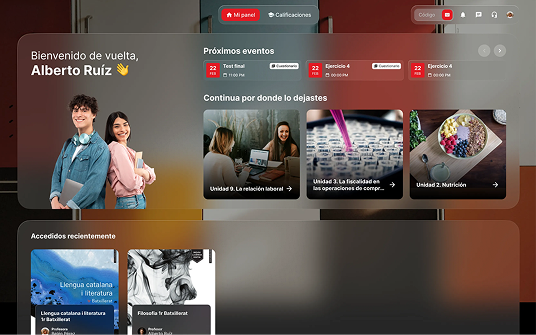
Take care of the visual and browsing experience
SCORM content can have good content and still fail if the experience is poor. Key aspects that make a difference:
- Clean and legible design.
- Clear and predictable navigation.
- Balanced use of text, video, and visual resources.
- Adaptation to different devices.
User experience is not an extra: it is part of learning.
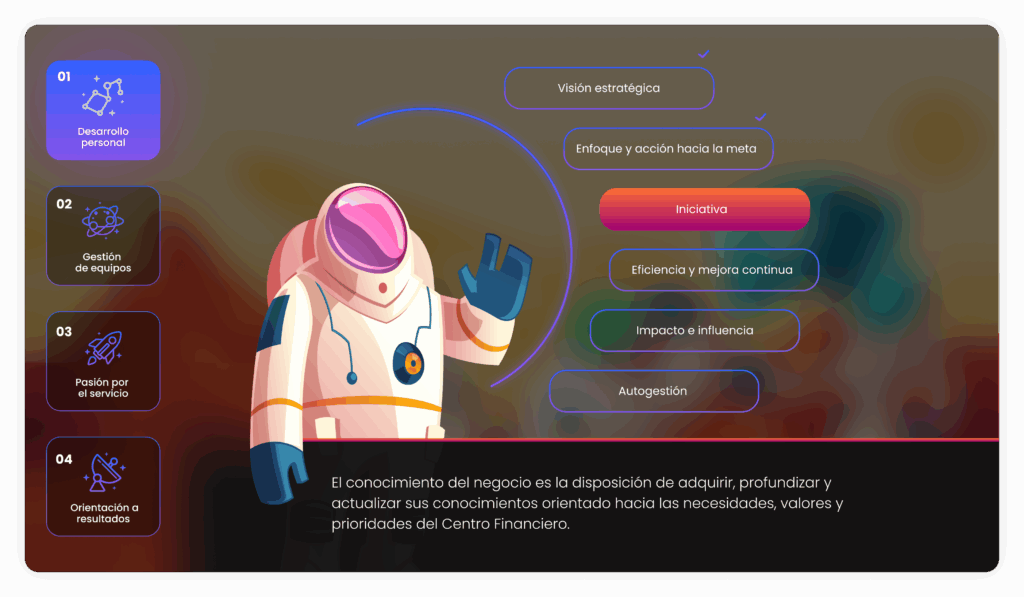
Integrate SCORM into a training strategy
Another common mistake is treating SCORM as an isolated piece. The content that works best tends to:
- Be part of an itinerary.
- Be accompanied by other formats (video, live sessions, downloadable resources).
- Have continuity beyond the course.
When students understand the context, their motivation increases.
SCORM done right: less dropout, more impact
A well-structured SCORM:
- It is being completed.
- It is remembered better.
- Generates less rejection of online training.
- Provides useful data to improve future training activities.
At 3ipunt, we design SCORM content with people in mind, not to meet technical requirements. Content that works within the LMS and, above all, outside of it, in the user’s day-to-day life.