Some projects don’t start with a big strategic question, but with a very specific need: to bring order, gain autonomy, and do so without any hassle.
This was the case with Ecoembes. An organisation with a very clear purpose—to promote the circular economy and move towards a waste-free future, which needed to take its internal training to the next level.
The challenge: moving from content to training
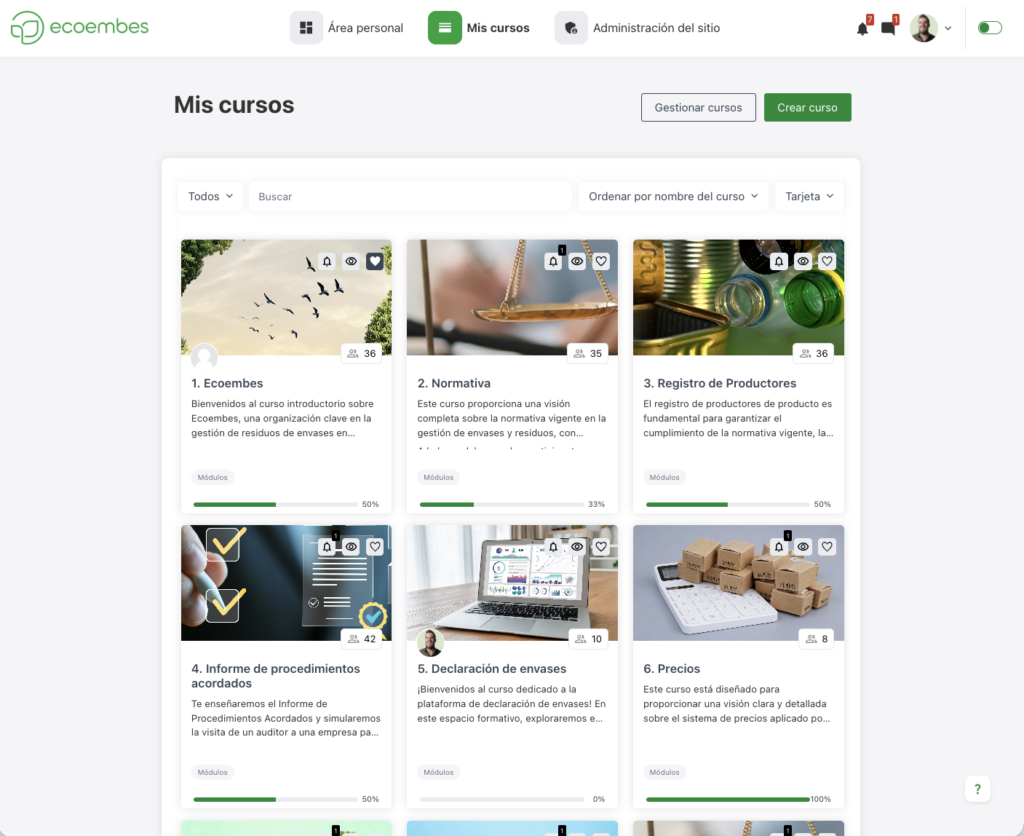
Before implementing Goodle LMS, Ecoembes needed something that is quite common in many organisations: a platform that would not only host content but also enable the management of all training.
Because having PDFs, videos or presentations is not the same as having a training system. They needed to centralise:
- Enrolment
- User tracking
- Certification
- And compliance with legal requirements
All of this with a clear objective: to be able to manage it independently and without a constant technical burden. Furthermore, there was a genuine concern: to ensure that the model was sustainable at an operational level.
The solution: simplicity, control and support
The decision to choose Goodle was not based solely on the technology, but on the model. A solution based on Moodle, but presented as a comprehensive service, where the technical aspects are no longer an issue and are taken care of from the outset.
This allowed Ecoembes to focus on what really mattered: training. The platform was up and running in just two weeks, fully customised and ready to use. But beyond the speed, it was the process that mattered.
We worked together to set up the environment, tailor it to their needs and train the in-house team. This enabled them to manage the platform independently right from the start.
Furthermore, the ongoing support made it possible to update elements such as certificates, questionnaires and legal settings without any hassle.
A clear change in day-to-day life
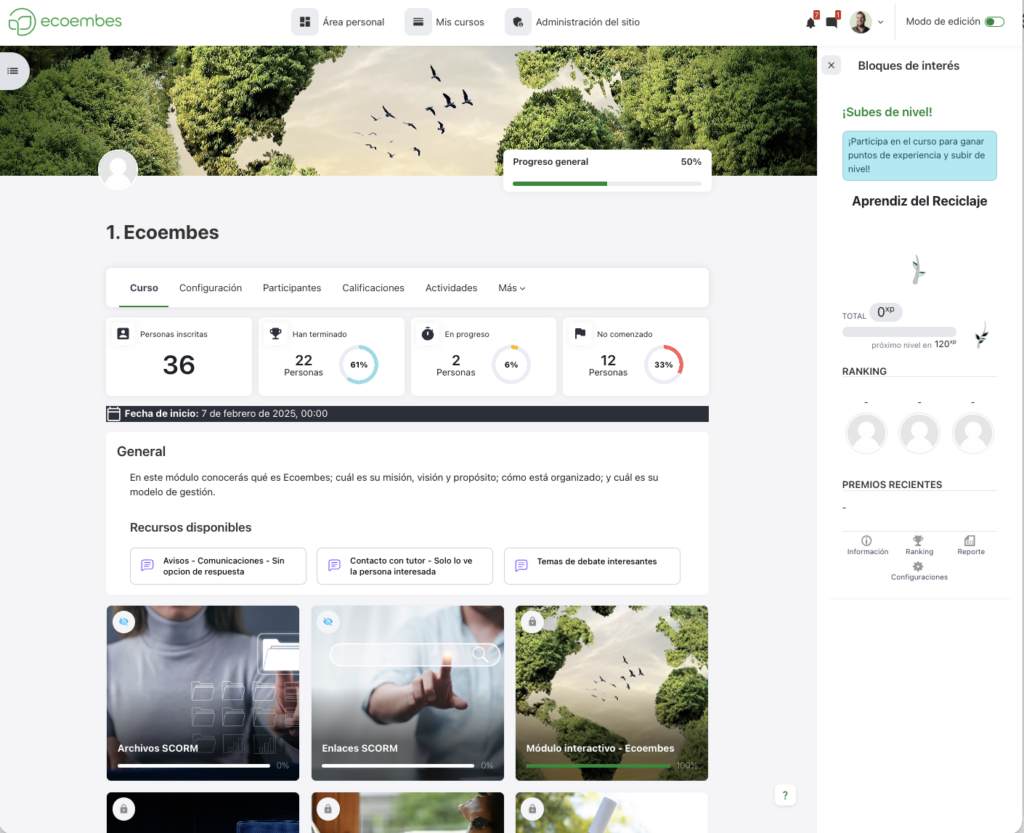
Following the implementation, the training programme was given a structured framework. Everything was centralised on a single platform, processes were standardised, and many tasks were automated.
This was translated as:
- This was translated as:
- Greater control over users’ progress
- And more efficient course management
It even made it possible to work with ‘neglected’ courses, optimising resources without compromising on monitoring or quality.
From documents to learning experiences
Another key aspect of the project was the work on the content. Ecoembes started with materials in PDF format and presentations. This was useful information, but designed more for reference than for online learning.
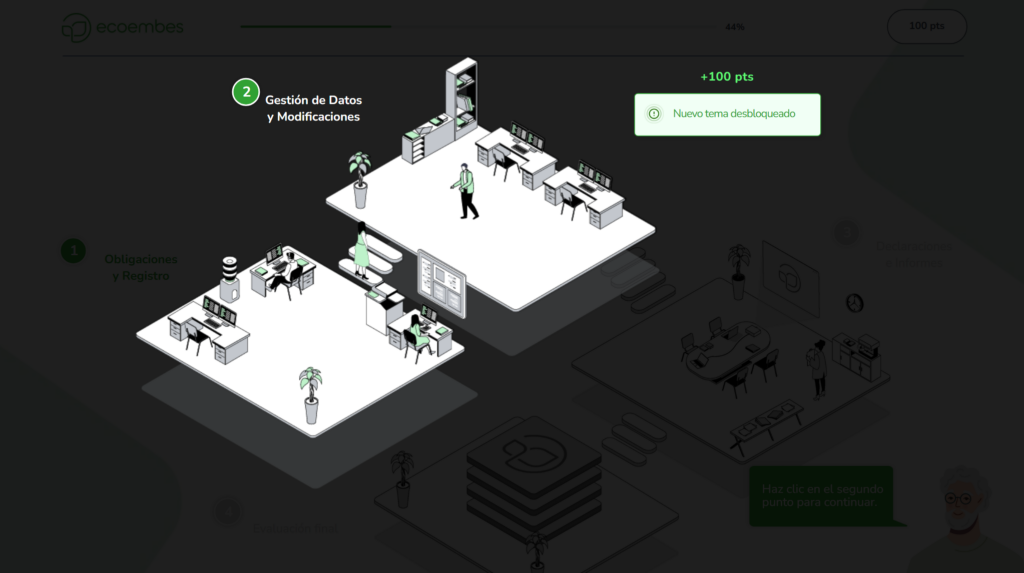
The aim was to transform them, not simply to transfer them. The information was reorganised, the message was simplified, and it was presented in a more practical format. The course was designed as a step-by-step case study, featuring real-life situations, dialogues and visual aids.
In addition, self-assessment features have been incorporated to reinforce understanding. This change completely transforms the experience: users no longer simply read content, but actively engage with it.
Greater involvement, better learning
This new approach has had a clear impact on how users engage with training.
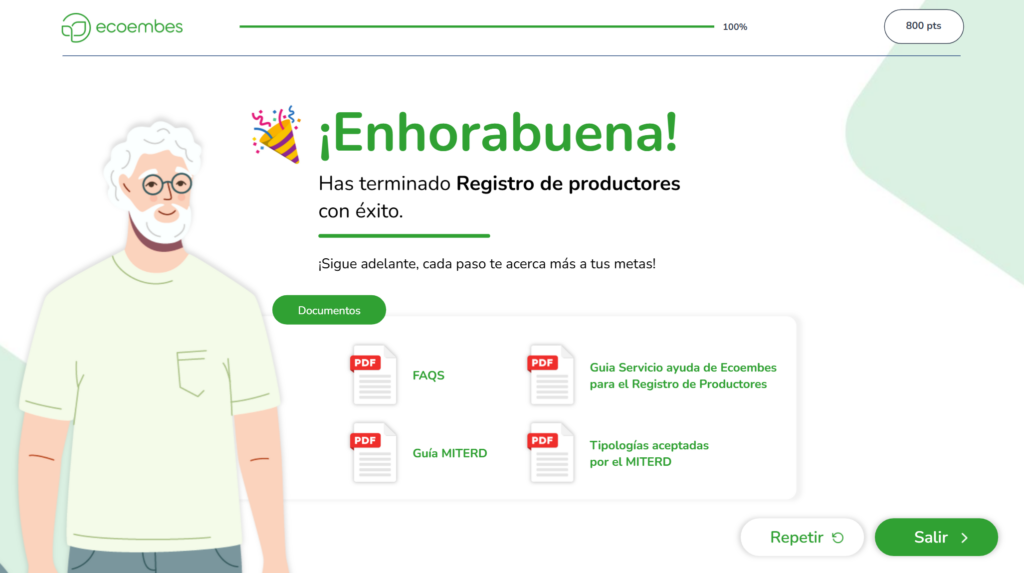
The content is more dynamic, easier to follow and more closely reflects real-life situations. This makes it easier to understand and helps learners complete the courses. And although the numbers aren’t huge, one thing is clear: the training is being put to use and is fulfilling its purpose.
In this case, Ecoembes has moved from having scattered content to having a structured training environment that is easy to manage and ready for growth. The combination of a platform such as Goodle and a more refined approach to content has enabled them to reduce their operational workload, gain greater control and offer a clearer training experience for users. This provides a solid foundation for continuing to develop their training model without complications.