
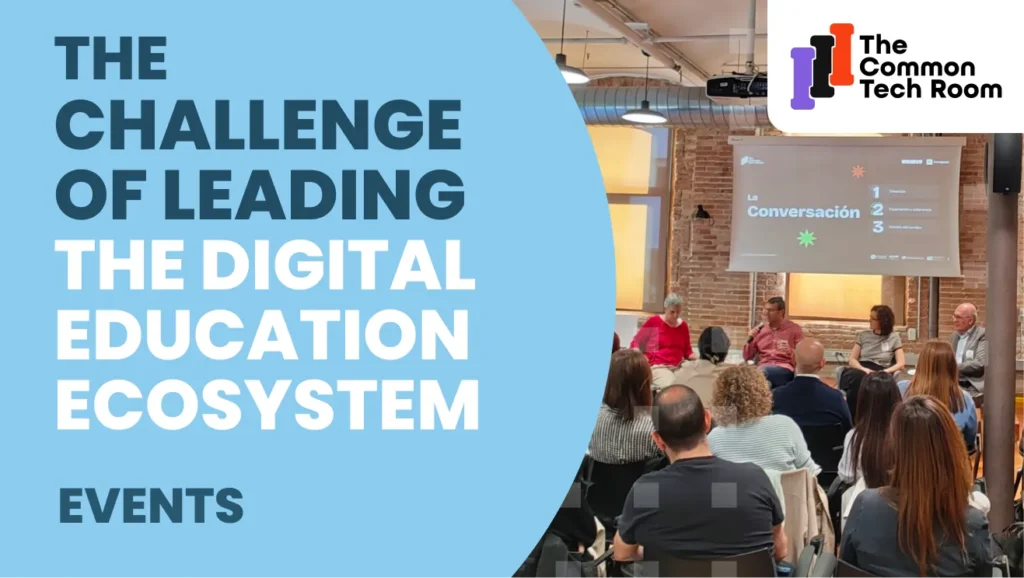
Last week, together with UNIFIT, Edutech Cluster, and the Open University of Catalonia (UOC), we held the first edition of The CommonTech Room, a forum designed to explore one of the major challenges currently facing educational institutions: how to lead increasingly complex digital ecosystems without losing sight of the human element.
We are living in a time when the digital transformation of education is advancing at a rapid pace. New tools, artificial intelligence, automation, LMS platforms, integrations, and digital processes are constantly emerging in universities, training centers, and organizations. And often, the real challenge is no longer simply adopting technology, but ensuring that everything fits together seamlessly within the ecosystem.
That is precisely why this event was created. It was inspired by those old university common rooms where ideas were shared around the fire and meaningful conversations took place.
Because sometimes, taking a moment to think is also part of moving forward.
How to lead digital transformation in educational institutions
One of the highlights of the day was the panel discussion featuring Ramón Martí, Jordi Duran, and Susana Álvarez, moderated by Ana Sedano.
The discussion touched on many of the challenges facing universities and educational organizations today: technology governance, sustainability, distributed leadership, user experience, and the difficulty of making decisions within digital ecosystems that have grown through accumulation.
Because many institutions currently use a variety of digital platforms, tools, and processes that have been adopted to address specific needs, but without a comprehensive view of the educational ecosystem.
The conversation centered on three main topics.
Strategy
The need to rethink digital ecosystems that have often grown through accumulation. Talking about technology also means talking about judgment, governance, and making decisions about what makes sense to keep, integrate, or leave behind.
Experience
Technology only adds value when it truly enhances people’s experiences. Integration, consistency, and simplification emerged as key elements in building more sustainable and useful ecosystems.
Expectation
Organizations must navigate constant expectations and changes. The biggest challenge is to move forward, innovate, and transform without leaving people behind or allowing complexity to become yet another obstacle.

Simpler and more sustainable digital learning ecosystems
Another key topic was the need to build more coherent and sustainable digital ecosystems.
When educational platforms, learning management systems (LMS), and tools operate in isolation, the burden of that complexity ultimately falls on people: technical teams, teachers, students, and organizations, who are forced to manage an ever-increasing number of digital processes.
That is why concepts such as integration, simplification, and user experience came up repeatedly during the conversation. After all, technology only adds value when it truly makes work easier and improves the experience of the people who use the digital ecosystem every day.
And that is precisely one of the major challenges of today’s digital transformation in education: ensuring that technology supports the process without becoming yet another barrier.
Artificial Intelligence in education: integrating AI thoughtfully
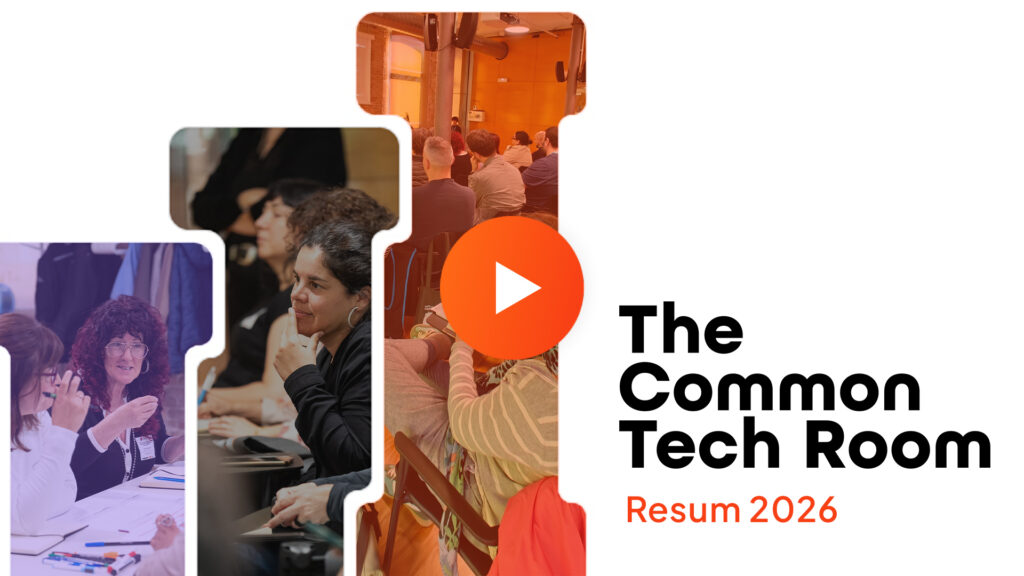
The event also featured a participatory session in the World Café format, organized in collaboration with the University of Valladolid, focusing on the integration of artificial intelligence into educational institutions.
Beyond the media buzz surrounding AI, the discussion focused on far more important issues: governance, training, sustainability, judgment, and support.
How can we integrate artificial intelligence tools into educational platforms and digital ecosystems without adding to their complexity? How can we harness their potential without losing sight of the educational and human aspects?
Among the many interesting insights shared, one idea stood out as particularly resonant with the attendees: viewing AI as an ally within teams. Not as a substitute for people or professional judgment, but as a tool capable of supporting processes, automating tasks, and helping teams move forward more efficiently.
Let’s keep the fire burning until next time
We hope that the first edition of The CommonTech Room will be the first of many. Throughout the day, it became clear that many educational institutions face similar challenges regarding digital transformation, technology management, and the evolution of their learning platforms.
Another important point also became clear: often, the most useful conversations aren’t the ones that provide immediate answers, but rather the ones that help us better understand the complexity of the current situation.
In a world where expectations, technology, and artificial intelligence are constantly evolving, creating opportunities to share experiences, exchange perspectives, and reflect together is becoming more necessary than ever.
Because leading a digital educational ecosystem isn’t just about adopting new tools. It’s about managing change, navigating complexity, and supporting the people who make this transformation possible.