

Many organizations face the same problem: they have an online learning management system (LMS), but users aren’t using it. It’s not a technical glitch, nor is it usually a problem with Moodle. It’s something more structural.
The platform isn’t being used because people don’t understand it
When someone visits for the first time (or returns after a while), three very basic questions should answer themselves:
- What am I supposed to do here?
- Where do I start?
- What’s the point of this?
If that isn’t clear within the first few seconds, something goes wrong.
Taking courses is not the same as receiving training
This happens all the time. There’s content. There are courses. Sometimes there are a lot of them. But there isn’t always a clear logic behind it.
Mandatory training mixed with optional courses. Vague career paths. Catalogs that grow without much direction. And in the end, from the outside, it all looks the same.
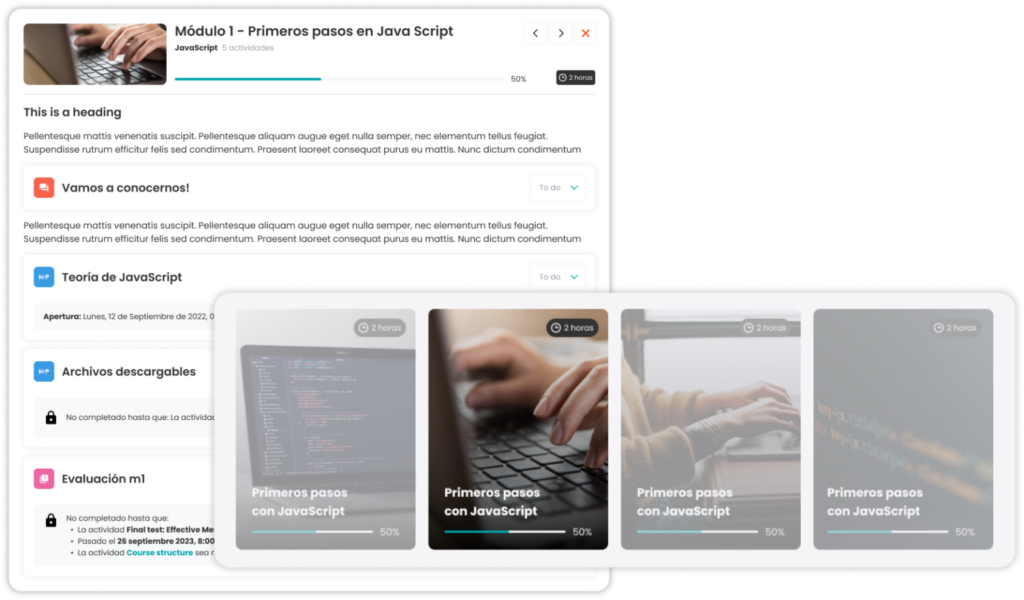
Experience counts too
We’re not talking about major redesigns or complicated things here. We’re talking about details:
- How to navigate
- What do you see first?
- What stands out
- What lies hidden
Small decisions that make logging into the platform feel natural… or like a chore.
Moodle isn’t the problem
Sometimes the reaction is clear: “We need more features.” More automation, more courses, more options. But often that’s not the answer. In fact, what works best is usually the opposite: organizing, simplifying, and making sense of things.
Moodle (and any well-designed LMS) has more than enough features to make a platform work. Change usually doesn’t come from switching tools, but from changing how they’re used.
Moving from “we have a platform” to “we have a learning environment that people actually use.”
We invite you to try the Formometer, a test designed to measure the level of training maturity within an organization.
At 3ipunt, we’ve been observing this pattern for some time now. And it almost never has anything to do with the tool itself. It has to do with how everything around it is built. Because in the end, a platform doesn’t work better because of all the things it lets you do… but because of how easy it is to use.